





ORGANS OF PARIS © 2026 Vincent Hildebrandt HOME ALL ORGANS

C3
The old choir organ in the cathedral was built in 1837 by
organ builder John Abbey, based in Versailles (rue de la
Chancellerie, near the cathedral and the palace). Back then,
it had nine stops: six on the Great Organ—Flute, Bourdon,
Prestant, Doublet, Full Mixture, Trumpet—and three on the
Swell—Open Flute, Prestant, Oboe. In 1863, Cavaillé-Coll
restored it and tweaked the layout a bit. It was moved to
Tunis Cathedral in 1883, replaced by a big Mutin organ in
1923, and probably disappeared after that. Read more...
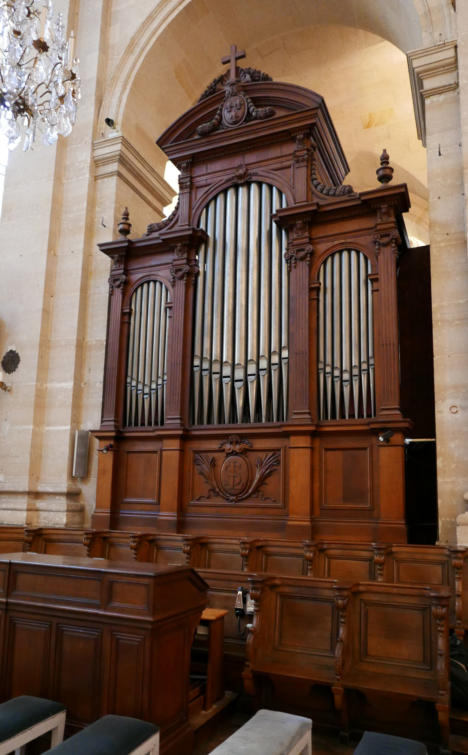
In 1880, the Cathedral Fabric Council and Aristide Cavaillé-
Coll signed a contract for building, transporting, and
installing "in the choir of the St-Louis Cathedral Church in
Versailles a Great Accompaniment Organ, made to the rules
of art and the specifications signed by the builder on March
14, 1879." He also agreed "to build and install an organ
case... in oak wood, decorated with polished and burnished
display pipes." "Mr. A. Cavaillé-Coll undertakes to take over
the current choir organ." This document confirms the full
replacement of John Abbey's organ.
In 1911, Charles Mutin added a 27-note pedalboard drawing
the 16' Bourdon Bass from the Great Organ via pneumatic
borrowing.
In 1940 and 1947: two interventions by builder Bossier in a
neo-classical style, adding mutations to the Great Organ
(nasard and tierce) and moving the Full Mixture to the Swell
on a posted windchest.
In 1978, Adrien Maciet completely readjusted the original
mechanics, replaced the too-narrow bench, and installed a
new 30-note pedalboard.
In 2001, a restoration by Gildas Ménoret from Nantes: back
to the Cavaillé-Coll organ (removing the Great Organ
mutations, restoring the romantic Full Mixture to the Great
Organ).
Stoplist:
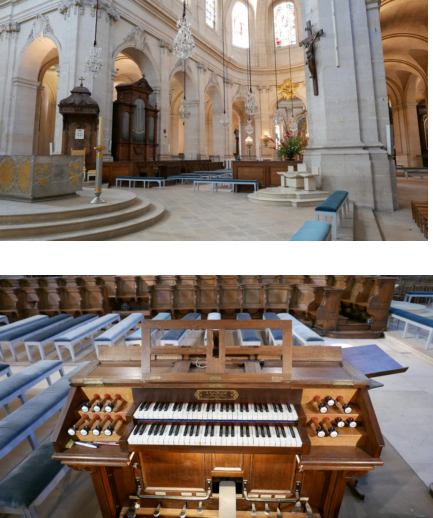
Reed on/off + cancel (from Swell): the clever mechanism still
lets you pre-select the stops by rotating the drawstops.
The Subbass stop still has no drawstop; on/off is via a toe
piston.
Source


1880 - Aristide Cavaillé-Coll (1)
1911 - Charles Mutin (6)
1940/47 -Jules Bossier (3b)
1978 - Adrien Maciet (6)
2001 - Gildas Ménoret (5)
II/15 (14) - mechanical traction
Composition








Organs of Paris


ORGANS OF PARIS © 2026 Vincent Hildebrandt
C3
The old choir organ in the cathedral was built in 1837 by
organ builder John Abbey, based in Versailles (rue de la
Chancellerie, near the cathedral and the palace). Back then, it
had nine stops: six on the Great Organ—Flute, Bourdon,
Prestant, Doublet, Full Mixture, Trumpet—and three on the
Swell—Open Flute, Prestant, Oboe. In 1863, Cavaillé-Coll
restored it and tweaked the layout a bit. It was moved to
Tunis Cathedral in 1883, replaced by a big Mutin organ in
1923, and probably disappeared after that. Read more...
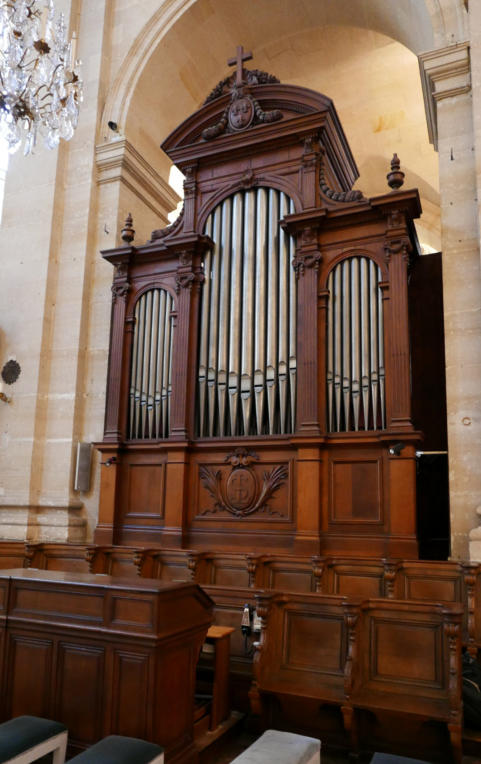
In 1880, the Cathedral Fabric Council and Aristide Cavaillé-
Coll signed a contract for building, transporting, and installing
"in the choir of the St-Louis Cathedral Church in Versailles a
Great Accompaniment Organ, made to the rules of art and
the specifications signed by the builder on March 14, 1879."
He also agreed "to build and install an organ case... in oak
wood, decorated with polished and burnished display pipes."
"Mr. A. Cavaillé-Coll undertakes to take over the current choir
organ." This document confirms the full replacement of John
Abbey's organ.
In 1911, Charles Mutin added a 27-note pedalboard drawing
the 16' Bourdon Bass from the Great Organ via pneumatic
borrowing.
In 1940 and 1947: two interventions by builder Bossier in a
neo-classical style, adding mutations to the Great Organ
(nasard and tierce) and moving the Full Mixture to the Swell
on a posted windchest.
In 1978, Adrien Maciet completely readjusted the original
mechanics, replaced the too-narrow bench, and installed a
new 30-note pedalboard.
In 2001, a restoration by Gildas Ménoret from Nantes: back to
the Cavaillé-Coll organ (removing the Great Organ mutations,
restoring the romantic Full Mixture to the Great Organ).
Stoplist:
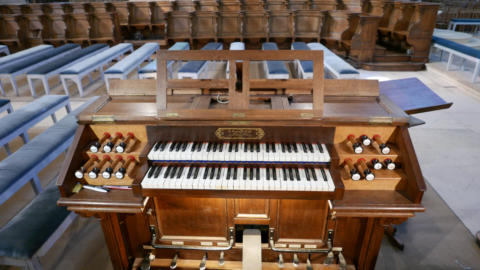
Reed on/off + cancel (from Swell): the clever mechanism still
lets you pre-select the stops by rotating the drawstops.
The Subbass stop still has no drawstop; on/off is via a toe
piston.
Source
1880 - Aristide Cavaillé-Coll (1)
1911 - Charles Mutin (6)
1940/47 -Jules Bossier (3b)
1978 - Adrien Maciet (6)
2001 - Gildas Ménoret (5)
II/15 (14) - mechanical traction
Composition